SEMICON India 2026: India’s Semiconductor Growth & Dholera
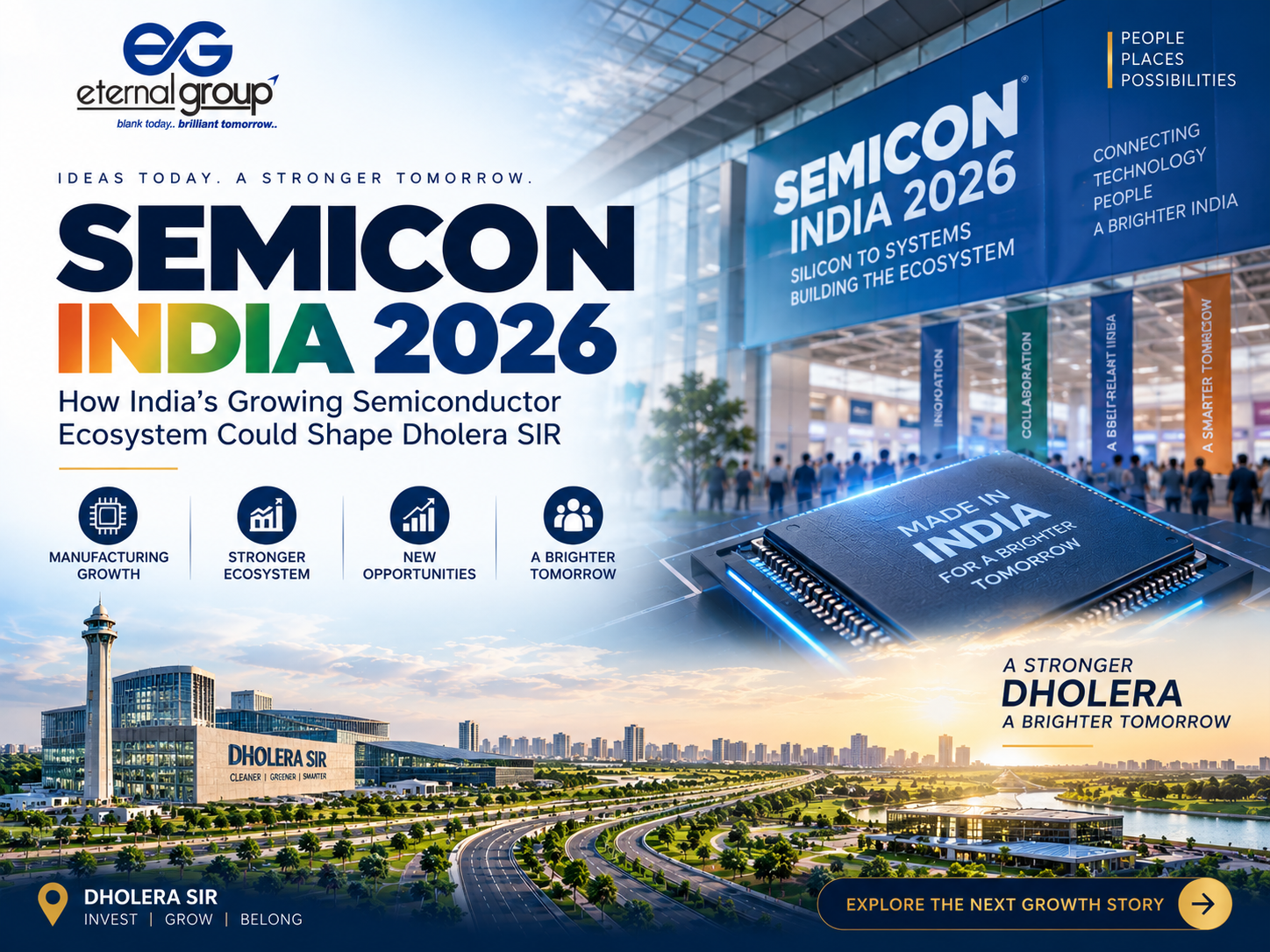
SEMICON India 2026: How India’s Growing Semiconductor Ecosystem Could Shape Dholera SIR
India’s semiconductor industry is entering an important phase of development, with increasing focus not only on chip manufacturing but also on semiconductor design, materials, equipment, advanced packaging, research and talent development.
A major reflection of this growth was seen at SEMICON India 2026, held from 17 to 19 September 2026 at Yashobhoomi, New Delhi. The event brought together more than 600 exhibitors, representatives from 52 countries and over 51,000 registrations. Across the three-day event, 56 MoUs, announcements and strategic initiatives were reported across areas including design, manufacturing, packaging, materials, equipment, R&D, startups and talent.
For Dholera SIR in Gujarat, these developments are particularly relevant because Tata Electronics is developing a 300mm semiconductor fabrication facility in Dholera. The development of supporting semiconductor capabilities could become an important part of the region’s wider industrial ecosystem.
What Was SEMICON India 2026 About?
SEMICON India 2026 was organised under the theme “Silicon to Systems: Building the Ecosystem.” The theme reflects an important aspect of India’s semiconductor strategy: developing capabilities across the broader semiconductor value chain rather than focusing only on chip fabrication.
The event featured more than 600 exhibitors, including around 300 international participants, along with representatives from 52 countries. It also included country and state pavilions, a startup pavilion, workforce development activities and innovation showcases.
The discussions and announcements covered several areas of the semiconductor industry, including:
- Semiconductor design
- Chip manufacturing
- Materials and equipment
- Advanced packaging
This broader approach is important because a semiconductor manufacturing ecosystem requires many interconnected industries and specialised capabilities.
Key Highlights of SEMICON India 2026
56 MoUs and Strategic Announcements
One of the major outcomes of SEMICON India 2026 was the announcement of 56 MoUs, strategic announcements and initiatives. These covered different stages of the semiconductor value chain, including manufacturing, materials, packaging, equipment, R&D, startups and talent.
Rather than looking at semiconductor manufacturing as a standalone activity, these developments highlight the importance of building connections between manufacturers, suppliers, technology companies, research institutions and skilled professionals.
600+ Exhibitors and 52 Countries
The participation of more than 600 exhibitors and representatives from 52 countries demonstrated the international and domestic participation surrounding India's semiconductor ecosystem.
The event therefore served as a platform for technology collaboration, investment discussions, supply-chain partnerships and workforce development.
Commercial Production Milestones
SEMICON India 2026 also highlighted the progress of semiconductor projects moving towards commercial production. The government reported the inauguration of commercial production lines at CDIL Semiconductor in Mohali and Suchi Semicon in Surat.
These milestones are significant because they demonstrate progress from approved projects and development plans towards operational semiconductor manufacturing capabilities.
What Is Semicon 2.0?
Another important development for India's semiconductor sector is Semicon 2.0.
The Union Cabinet approved Semicon 2.0 in July 2026 with a total budget outlay of ₹1,27,500 crore. The programme focuses on strengthening India's semiconductor design and manufacturing ecosystem through six broad areas: design, machines and materials, new fabs, advanced packaging, research and development, and talent development.
The objective is to develop capabilities across a wider portion of the semiconductor value chain.
This is important because semiconductor manufacturing requires much more than a fabrication plant. It also depends on specialised materials, manufacturing equipment, packaging, research, chip design, supply chains and skilled professionals.
Why Is Dholera Important to India’s Semiconductor Ecosystem?
Dholera SIR has gained attention in India's semiconductor landscape because of Tata Electronics' semiconductor fabrication project.
The government has described the Dholera facility as India's first commercial semiconductor fab. The project has an announced investment of approximately ₹91,526 crore and planned capacity of 50,000 wafer starts per month.
At SEMICON India 2026, Tata Electronics confirmed that construction of its 300mm fab in Dholera was on track. The company also highlighted planned partnerships in areas including wafer manufacturing, assembly and testing, advanced semiconductor packaging, photoresists and advanced chemicals, localisation of critical semiconductor materials and talent development.
These developments show why Dholera's semiconductor story extends beyond a single fabrication facility.
Semiconductor Ecosystem Beyond the Fab
A semiconductor fab is one part of a much larger industrial network.
Semiconductor Materials
Semiconductor manufacturing requires specialised chemicals, gases and other materials. Developing local supply capabilities can support manufacturing operations and supply-chain resilience.
Equipment
Advanced semiconductor manufacturing depends on specialised equipment and technology. Equipment suppliers and technology partners can therefore become important parts of the ecosystem.
Advanced Packaging
After semiconductor manufacturing, chips require assembly and packaging before they can be integrated into electronic products. Advanced packaging is also one of the areas emphasised under Semicon 2.0.
Chip Design
Semiconductor design is another major component of the value chain. India's existing capabilities in engineering and chip design are being incorporated into the broader semiconductor development strategy.
Talent Development
The expansion of semiconductor manufacturing also requires engineers, technicians, researchers and other specialised professionals. Workforce development has therefore become another focus area under India's semiconductor initiatives.
What Could SEMICON India 2026 Mean for Dholera SIR?
The developments highlighted at SEMICON India 2026 could have broader implications for Dholera SIR because semiconductor manufacturing can generate demand for supporting industries and services.
Potential areas of development include:
Industrial activity: Supporting semiconductor companies may contribute to the diversification of Dholera's industrial ecosystem
Supplier opportunities: Materials, equipment, logistics and specialised services can become relevant to semiconductor manufacturing.
Employment potential: Expansion of manufacturing and supporting industries can create demand for skilled and technical professionals.
Commercial development: Greater industrial activity can increase requirements for supporting commercial and business infrastructure.
Real estate ecosystem: Over time, increased industrial and workforce activity could influence demand for surrounding commercial and residential infrastructure.
However, these should be viewed as potential outcomes rather than guaranteed results. The actual impact on employment, commercial activity and real estate demand will depend on project execution, investment realisation, infrastructure development and the establishment of supporting industries.
Dholera SIR and the Future of Semiconductor Manufacturing
India's semiconductor strategy is increasingly focused on creating an integrated ecosystem covering the journey from chip design and materials to manufacturing, packaging and talent.
Dholera's position in this ecosystem is connected to Tata Electronics' 300mm semiconductor fab and the development of supporting partnerships. Tata Electronics has also announced collaborations covering areas such as advanced packaging, materials and talent development.
As these projects progress, Dholera SIR will remain an important region to watch for developments in semiconductor manufacturing, industrial infrastructure and supporting businesses.
For businesses and investors tracking Dholera SIR development, the key point is not simply the presence of one semiconductor project, but the possibility of a wider network of industries developing around it.
Check out our residential projects nearest location from Dholera SIR:-
Eterno Royal - Residential Project from Dholera SIR
Eterno City - Residential Project from Dholera SIR
Nestoria Atulyam - Residential Projects from Dholera SIR
Orchid Villa - Residential Projects from Dholera SIR
Conclusion
SEMICON India 2026 highlighted India's expanding semiconductor ambitions, with developments spanning manufacturing, materials, packaging, equipment, design, research and talent.
The event's 56 MoUs and strategic announcements, participation from more than 600 exhibitors and representatives from 52 countries demonstrate the scale of activity surrounding India's semiconductor ecosystem.
For Dholera SIR, Tata Electronics' 300mm semiconductor fab and the development of supporting semiconductor partnerships make the region an important part of India's emerging semiconductor landscape.
At the same time, announced investments and partnerships should be distinguished from completed projects. The long-term effect on employment, industrial activity, commercial development and real estate will depend on how these projects progress from announcements to execution.
As India's semiconductor ecosystem continues to develop, Dholera SIR will be an important region to watch for future industrial and infrastructure development.
Frequently Asked Questions
1. What is SEMICON India 2026?
SEMICON India 2026 was a three-day semiconductor industry event held from 17–19 September 2026 at Yashobhoomi, New Delhi. It brought together more than 600 exhibitors and representatives from 52 countries.
2. What is Semicon 2.0?
Semicon 2.0 is India's next phase of semiconductor ecosystem development, approved with a total outlay of ₹1,27,500 crore. It focuses on design, machines and materials, fabs, advanced packaging, R&D and talent development.
3. Why is Dholera important for semiconductor manufacturing?
Dholera is the location of Tata Electronics' planned 300mm semiconductor fabrication facility, making it an important location within India's semiconductor manufacturing landscape.
4. What is the Tata Electronics Dholera semiconductor project?
The Dholera semiconductor fab has an announced project investment of approximately ₹91,526 crore and planned capacity of 50,000 wafer starts per month.
5. Can semiconductor development affect Dholera real estate?
Semiconductor development could create demand for supporting industrial, commercial and workforce-related infrastructure. However, the actual impact on Dholera real estate will depend on project execution and the development of the wider ecosystem.
Recent News

Dholera SIR Latest News 2026: Airport, Expressway...


Dholera Revenue Growth: Accenture FY2027 Outlook

Dholera: NX Group Targets $380 Million Revenue as...